A Large Breed Fighting the Size-Lifespan Tradeoff
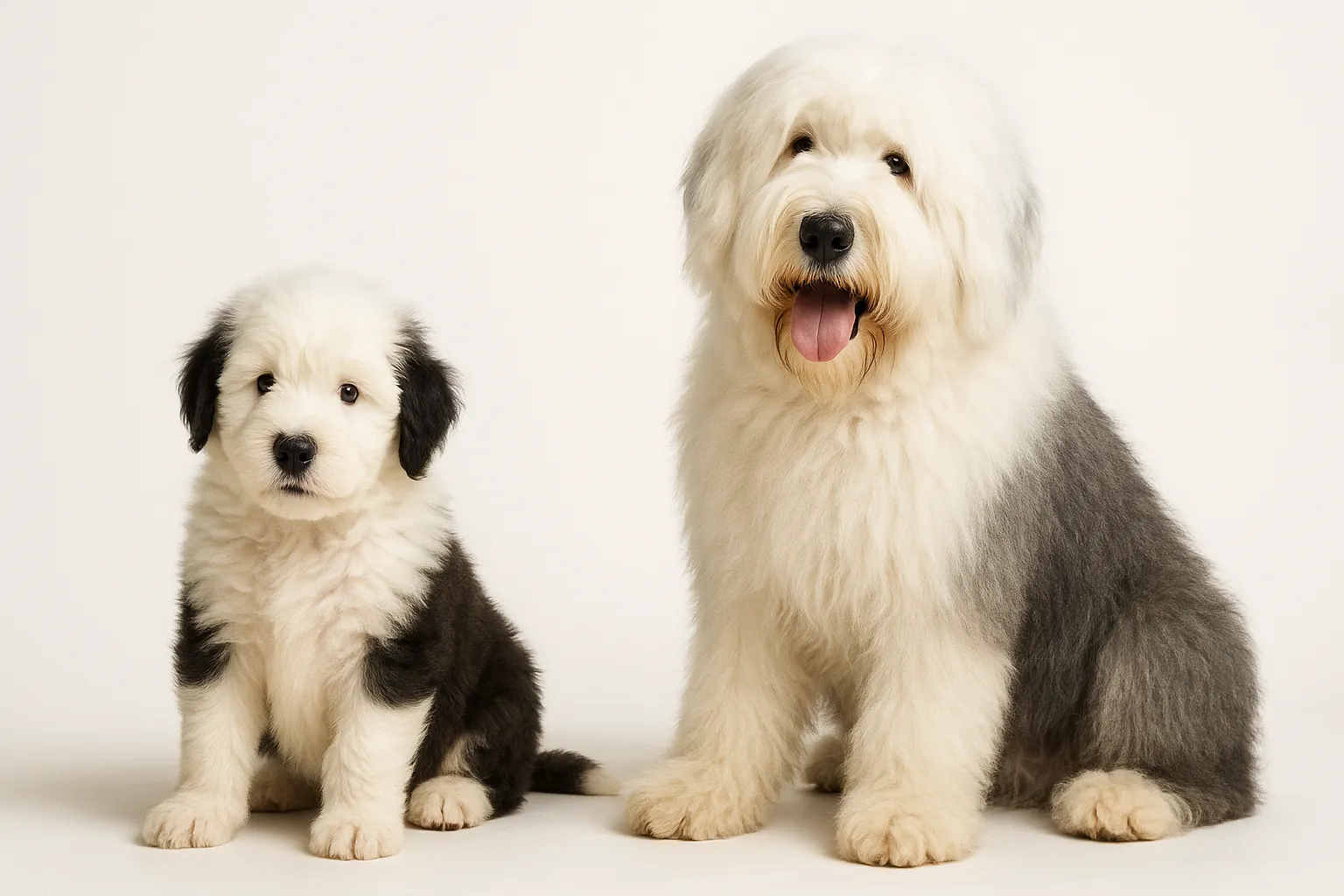
Old English Sheepdogs typically live 10-12 years. They are large, heavily coated herding dogs with working-dog constitutions — and significant heritable health challenges that their spectacular coat can hide from you.
Hip dysplasia prevalence in this breed is among the worst in any herding breed. OFA data consistently places them at rates exceeding 20%. Their extensive double coat requires serious maintenance to prevent skin disease underneath, and it conceals health changes — weight gain, muscle loss, gait abnormalities — that would be visually obvious in shorter-coated breeds. Owning an OES means learning to assess health by touch, not just by sight.
Progressive retinal atrophy (PRA-CNGA1) is a significant breed-specific hereditary blindness condition. Hypothyroidism affects the breed at above-average rates. Cancer rates are similar to other large herding breeds, and the combination of hip dysplasia and secondary arthritis is the leading cause of quality-of-life decline in senior OES.
The Health Conditions That Define This Breed
Hip Dysplasia
Hip dysplasia affects a very high proportion of Old English Sheepdogs. OFA evaluation at 24 months is standard for breeding dogs, and lean body condition throughout life is the most impactful protective factor. The OES coat obscures body shape, making monthly rib palpation (body condition scoring by feel) essential. Visual assessment alone is unreliable in this breed.
See the Hip Dysplasia guide for full prevention and management detail.
Hypothyroidism
Hypothyroidism occurs at above-average rates in OES. Annual thyroid panels starting at age 3 provide reliable detection. The breed’s heavy coat can mask the classic signs — weight gain, lethargy, coat changes — making laboratory screening particularly important rather than relying on clinical observation alone.
See the Hypothyroidism guide for full prevention and management detail.
Cancer
Cancer rates in OES are consistent with other large herding breeds, with several reported tumor types. Annual examinations after age 6 with lymph node palpation and prompt workup of any new masses are the primary surveillance tools.
See the Cancer guide for full prevention and management detail.
Arthritis
Secondary arthritis develops in OES with hip dysplasia and is a common senior-stage condition. Weight management, omega-3 supplementation, and veterinarian-supervised analgesic management form the ongoing approach. Again, the coat can mask gait changes associated with early arthritis — you need to feel for these changes, not just look.
See the Arthritis guide for full prevention and management detail.
Bloat (GDV)
The OES body size and deep chest create moderate GDV risk. Discuss prophylactic gastropexy at initial puppy wellness visits. Preventive feeding management — twice-daily feeding, slow-feeder bowls — reduces risk regardless of gastropexy status.
See the Bloat (GDV) guide for full prevention and management detail.
Longevity Interventions That Have Data Behind Them
Test for PRA Early
Progressive retinal atrophy (PRA-CNGA1) is a significant hereditary blindness condition in Old English Sheepdogs caused by a known recessive mutation. DNA testing identifies carriers and affected dogs before clinical signs appear. Affected dogs lose night vision first, then daylight vision progressively.
Test all OES, not just breeding dogs. Understanding your dog’s vision trajectory allows you to prepare the environment proactively. The OES breed club maintains a PRA testing registry. Combine PRA DNA testing with CERF/OFA Eye Certification Registry annual exams for complete eye health monitoring.
Master the Coat
The OES double coat requires brushing to the skin 2-3 times weekly. Mats trap moisture and create the warm, anaerobic conditions ideal for bacterial and yeast skin infections. A mat at the skin surface is significantly harder to detect than a surface-level tangle, and in a heavily coated breed, these hidden mats are common.
Use a slicker brush and metal comb, working section by section. Professional grooming every 6-8 weeks including de-shedding reduces the at-home maintenance burden. Never shave an OES coat to the skin — it disrupts the insulation system and the coat may regrow with altered texture.
Commit to Lifelong Hip Management
For OES, hip management starts in puppyhood and never stops. Maintain lean body condition throughout growth. Avoid high-impact activities before 18 months. Schedule OFA evaluation at 24 months.
After evaluation, ongoing monitoring includes monthly body condition scoring (by palpation — you cannot rely on visual assessment), consistent omega-3 supplementation, and regular veterinary joint palpation. The breed’s dense coat makes visual observation of gait changes and muscle atrophy unreliable. Objective palpation and range-of-motion assessment are your real tools.
The Longevity Priorities That Move the Needle
The actions most likely to extend your Old English Sheepdog’s healthy years:
- OFA hip evaluation at 24 months — hip dysplasia rates in OES are among the highest of any herding breed
- Annual thyroid screening given elevated hypothyroidism prevalence
- Daily coat maintenance to prevent mats that cause skin disease beneath the coat
Frame your prevention investment around these targets. When resources are limited, these are where the evidence says to spend them first. See Hip Dysplasia, Hypothyroidism, Cancer for the full clinical picture.
Evidence-Based Longevity Priorities
Weight Control Under the Coat
Weight stability and muscle quality are foundational to orthopedic health and metabolic longevity in OES. As a large breed, joint load and metabolic strain rise quickly when body composition drifts. The challenge is that the coat hides this drift. Monthly palpation-based body condition scoring is not optional for this breed — it is the only reliable method.
Prevention Targeting the Top Three
Your highest-yield prevention effort targets Hip Dysplasia, Hypothyroidism, Cancer. Early, consistent action on these conditions preserves the interventions that late detection forecloses.
Routine Quality Drives Aging Quality
Daily routine quality directly affects how OES age. Unpredictable schedules and insufficient mental work often show up as behavior drift, sleep disruption, or slow recovery before physical decline becomes obvious. These are intelligent herding dogs that need cognitive engagement throughout life.
Screen Before the Window Closes
Set routine veterinary review checkpoints and escalate frequency when orthopedic function or gait quality shows early drift. Prevention windows close quickly once symptoms become obvious, and in a coated breed, symptoms become obvious later than they should.
Breed-Specific Research
Use these evidence deep dives to add mechanism-level context to your Old English Sheepdog longevity plan:
- Arthritis Pain Management Stack For Dogs: evidence framework for hip dysplasia and arthritis management in large herding breeds
- Senior Dog Screening Protocol: framework for annual wellness testing in large long-coated breeds
- Canine Obesity And Lifespan Evidence: evidence base for weight management and joint disease relationship
Genetic Testing: When It Matters
Genetic testing in Old English Sheepdogs should drive monitoring strategy, not replace it. Use results to tighten surveillance windows and calibrate intervention thresholds. Consider MDR1 gene testing for medication safety and hip and elbow scoring (OFA or PennHIP) to quantify orthopedic risk as part of the initial assessment.
- Match your initial testing to the breed’s established vulnerabilities. One round of results tells you where to look; repeated clinical assessment tells you what is actually happening.
- Build your initial monitoring playbook around Hip Dysplasia and Hypothyroidism, so that every test result feeds into a specific follow-up action.
- Your most powerful monitoring tool costs nothing — a running record linking test data to clinical findings to what you observe at home. The connections between entries are where the real insights live.
- Treat each annual exam as a chance to re-read your genetic data against fresh clinical findings. The same panel results carry different weight as your Old English Sheepdog ages.
Testing has the most value when it changes what you measure this quarter.
Breeding History & Health Implications
The OES was bred for sustained herding work requiring endurance, vigilance, and independent decision-making. That heritage gave the breed strong cognitive capacity and working drive, but also structural vulnerabilities — particularly in the hips — that modern dogs carry forward.
- High hip dysplasia prevalence and cancer susceptibility require proactive screening at intervals that match the breed’s actual risk curve, not a generic wellness schedule.
- Direct your monitoring attention first to Hip Dysplasia, Hypothyroidism, Cancer — these are the risks that the breed’s working history and health data identify as most likely.
- Small, recurring changes are easier to dismiss than dramatic ones, but they are often more important. A pattern of minor drift is your earliest warning that something is shifting.
- Review and adjust your Old English Sheepdog’s longevity plan every quarter. The right focus at age two is not the right focus at age eight — let age, weight trends, and vet findings guide the updates.
The breed’s past shapes the risk landscape. Your Old English Sheepdog’s present — measured in real data, not assumptions — shapes the response.
Your Veterinary Screening Roadmap
- Puppy to 2 years: PRA DNA test, OFA hip evaluation, gastropexy discussion, coat care baseline
- 2 to 6 years: annual thyroid panel, wellness bloodwork, skin and coat assessment
- 7+ years: biannual exams, cancer surveillance, joint mobility assessment, eye monitoring
What and How to Feed
OES benefit from complete, high-quality large-breed diets with measured portions. Given the coat’s ability to conceal weight changes, monthly palpation-based body condition scoring is essential. Omega-3 supplementation supports coat and skin health as well as joint inflammation management. Avoid caloric excess from treats — with hip dysplasia prevalence this high, every extra calorie matters.
The Healthspan Horizon
Old English Sheepdogs have solid longevity potential when hip health and coat management are consistently maintained. Their herding heritage supports good athletic capacity and cognitive engagement throughout life. Early PRA detection, proactive hip management, and consistent thyroid screening give OES owners the information they need to protect their dogs across all life stages. The key is remembering that with this breed, what you feel matters more than what you see.
Most-Missed Early Drift Pattern
Early disease progression in Old English Sheepdogs usually presents as low-grade changes hidden beneath the coat:
- Subtle hind-limb stiffness after rest related to Hip Dysplasia that owners often dismiss as temporary
- Subtle compensation patterns that mask Hypothyroidism progression: lethargy attributed to breed temperament or aging
- Gradual drift toward Cancer signs that become harder to reverse: palpable masses, persistent lethargy, or sudden collapse
If baseline function is drifting for 7-10 days, treat it as a prevention failure signal and reassess early.
Frequently Asked Questions
What is PRA in Old English Sheepdogs?
Progressive retinal atrophy (PRA-CNGA1) is a hereditary blindness condition caused by a known recessive mutation in OES. Affected dogs progressively lose vision, starting with night vision. DNA testing identifies carriers and affected dogs before clinical signs appear.
How long do Old English Sheepdogs live?
OES typically live 10-12 years. Proactive hip management and consistent coat care are the most impactful owner-controllable factors.
Are Old English Sheepdogs hard to groom?
Yes — their dense double coat requires brushing to the skin 2-3 times weekly to prevent mats that cause skin disease. Professional grooming every 6-8 weeks reduces at-home maintenance burden significantly.
Are OES prone to hip dysplasia?
Yes — hip dysplasia rates in OES are very high, among the highest in herding breeds. OFA evaluation at 24 months and lifelong weight management are the primary management tools.
Does MDR1 gene mutation affect OES?
The MDR1/ABCB1 mutation has been reported in some herding breeds. DNA testing before any drug exposure is recommended, particularly before ivermectin-containing heartworm preventives or anesthesia with affected agents.
References
[1] OFA hip dysplasia statistics by breed. ofa.org. [2] PRA in Old English Sheepdogs: CNGA1 mutation. NCBI. [3] WSAVA global nutrition guidelines. wsava.org. [4] OES Club of America Health Committee. oesclub.org. [5] Merck Veterinary Manual. merckvetmanual.com.
Related reads
Related Reading
Continue exploring