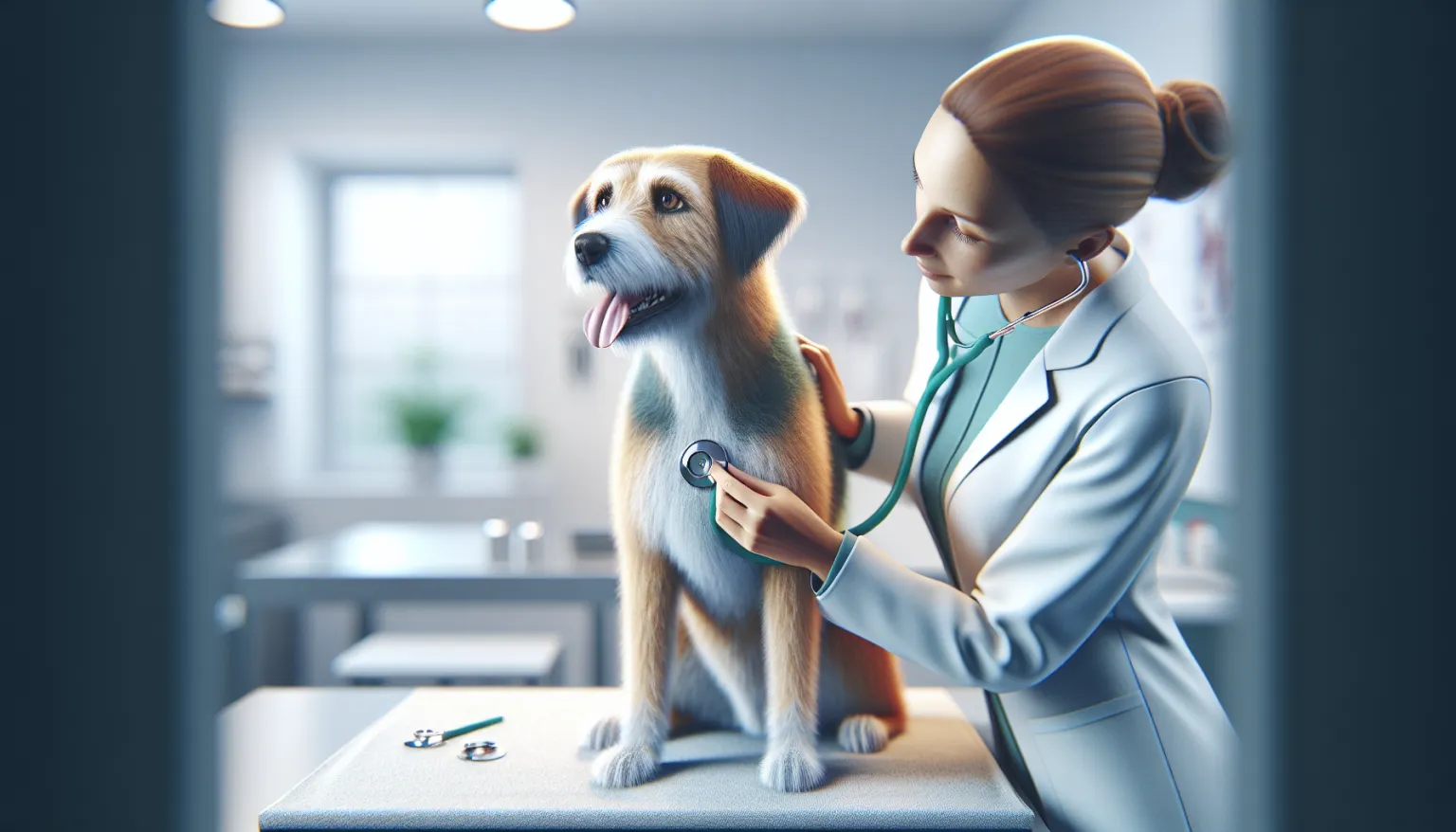
A Guardian Breed Meets a Working Intellect
The Great Pyrenees was bred to spend months alone in mountain pastures, making independent decisions about predator threats while bonding deeply with livestock. The Standard Poodle was developed as a retrieving water dog, later refined for circus performance and companionship, becoming one of the most trainable breeds in existence. The Pyredoodle combines these two very different working lineages into a large, calm, intelligent dog that typically weighs 55 to 100 pounds.
That size is the central fact of the Pyredoodle’s longevity profile. At the upper end of the weight range, a Pyredoodle enters giant-breed territory, where the biological costs of large body size — faster cellular aging, higher metabolic load, greater mechanical stress on joints — compress lifespan. The Great Pyrenees averages 10 to 12 years. The Standard Poodle averages 12 to 15. The Pyredoodle falls between at 10 to 14 years, with the larger individuals generally trending toward the lower end.
Every longevity intervention for this cross begins with managing the consequences of size.
Hybrid Vigor at Scale
First-generation (F1) Pyredoodles benefit from heterosis between two genetically distinct breeds. A 2013 JAVMA study of 27,000+ dogs found purebreds significantly more likely to develop 10 of 24 genetic conditions, particularly recessive disorders. The Great Pyrenees and Standard Poodle are genetically distant enough that their cross should produce meaningful heterosis for single-gene conditions.
However, the study found no significant protection for polygenic conditions — hip dysplasia, cancer, and bloat — in mixed-breed dogs. These are the primary threats to Pyredoodle longevity, and crossing two breeds does not reliably reduce their incidence.
The Great Pyrenees Inheritance
Bloat Risk
Bloat (gastric dilatation-volvulus, or GDV) is the most acute threat the Great Pyrenees contributes. Large, deep-chested breeds face dramatically elevated bloat risk compared to smaller dogs. A Purdue University study found that for large breeds, the lifetime risk of bloat approaches 24%, and it is fatal in approximately 30% of cases even with emergency treatment.
Bloat occurs when the stomach fills with gas, fluid, or food and potentially rotates on its axis, cutting off blood supply to the stomach and spleen. It progresses from discomfort to death within hours.
Prevention strategies:
- Feed two to three smaller meals daily instead of one large meal
- Use slow-feed bowls to reduce air ingestion
- Avoid vigorous exercise within one hour of eating
- Discuss prophylactic gastropexy with your veterinarian — this procedure, often performed during spay/neuter, tacks the stomach to the abdominal wall and dramatically reduces bloat mortality
You must know the signs: unproductive retching (trying to vomit with nothing coming up), distended abdomen, restlessness, pacing, excessive drooling, apparent abdominal pain. If you see these signs, drive to the nearest emergency clinic immediately. Do not call ahead. Do not wait to see if it improves.
Hip Dysplasia
The Great Pyrenees shows approximately 10% hip dysplasia prevalence per OFA data. At 55 to 100 pounds, the mechanical forces on dysplastic hips are substantial. Controlled growth during the first 18 to 24 months — the longer maturation period typical of large and giant breeds — is critical. Avoid overfeeding, calcium supplementation beyond what the food provides, and high-impact exercise before growth plates close.
Independent Temperament
Great Pyrenees are independent thinkers, bred for centuries to work without human direction. This temperament often transfers to the Pyredoodle and has health implications: these dogs may be less food-motivated (making weight management easier but training more challenging), less tolerant of restraint (complicating veterinary visits), and more prone to wandering if not securely contained.
The Standard Poodle Inheritance
The Standard Poodle brings meaningful longevity genetics to the cross. Its 12 to 15 year average lifespan is remarkable for a dog of its size (45 to 70 pounds), suggesting efficient metabolic programming that may partially counterbalance the Great Pyrenees’ size-related lifespan compression.
The Poodle also contributes several health concerns:
Cancer
Standard Poodles carry documented risk for several cancers, including hemangiosarcoma, insulinoma, and squamous cell carcinoma. Combined with the Great Pyrenees’ own cancer susceptibility (osteosarcoma in particular), cancer screening is a priority for the Pyredoodle.
Heart Disease
Standard Poodles show elevated rates of mitral valve disease and dilated cardiomyopathy compared to dogs of similar size. Cardiac auscultation should be part of every annual exam. Any detected murmur warrants echocardiographic evaluation.
Eye Conditions
Progressive retinal atrophy (PRA) is documented in Standard Poodle lines. The prcd-PRA variant is testable, and responsible breeders screen for it. Annual eye exams are warranted for the Pyredoodle.
Conditions Requiring Active Management
Growth Control in Puppyhood
Large and giant breed puppies are vulnerable to developmental orthopedic disease when growth rate outpaces skeletal maturation. For Pyredoodle puppies:
- Feed a large-breed puppy formula designed to moderate growth rate
- Do not supplement calcium beyond what the food provides
- Avoid forced exercise (long runs, sustained ball-chasing) until growth plates close (18 to 24 months)
- Monitor body condition weekly during growth phases
Large Breed Puppy Nutrition provides a comprehensive framework for feeding during this critical period.
Joint Health Through Life
Hip dysplasia from the Great Pyrenees side and general large-breed joint wear create a lifelong arthritis risk. The Purina Lifetime Study showed lean dogs developed arthritis four years later than overweight dogs. In a breed averaging 10 to 14 years, that four-year difference is transformative.
Swimming is the ideal exercise — the Great Pyrenees and Poodle both have water heritage, and many Pyredoodles take to swimming naturally. It builds cardiovascular fitness and muscle strength with zero joint impact.
Glucosamine and chondroitin supplementation may provide modest chondroprotective benefit when started before clinical arthritis develops.
Weight Management
Obesity in a 55 to 100 pound dog amplifies every other health risk. Each excess pound increases stress on joints, cardiovascular load, and cancer-promoting inflammation. Target body condition score 4 to 5 on the 9-point scale, with ribs easily palpable and a visible waist tuck.
Use Feeding Guide for Large Breeds for dogs under 80 pounds and Feeding Guide for Giant Breeds for those above 80 pounds. Measured meals, never free-feeding, with treats capped at 10% of daily calories.
Nutrition Strategy
The Pyredoodle’s caloric needs vary enormously across the 55 to 100 pound weight range. A 55-pound Pyredoodle may need roughly 1,000 to 1,200 calories daily, while a 100-pound one may need 1,600 to 2,000 depending on activity level. Use actual body condition, not breed averages, to calibrate feeding.
Omega-3 supplementation reduces systemic inflammation and supports joint and skin health. Protein quality matters — feed a complete, balanced diet with named animal protein as the first ingredient.
For bloat prevention, feed two to three meals per day using a slow-feed bowl. Elevated food bowls were once recommended but have shown mixed evidence; current guidance does not consistently support their use for bloat prevention.
Exercise Programming
Pyredoodles need 45 to 60 minutes of daily activity, adjusted for age and individual build. The Great Pyrenees side moderates energy level — these are not hyperactive dogs — but consistent exercise is essential for weight management and joint health.
- Swimming: ideal exercise for this cross
- Long, moderate-pace walks on varied terrain
- Gentle hiking on natural surfaces
- Mental enrichment: training, puzzle toys, scent work
Avoid: running on hard surfaces (especially in dogs under 18 months), exercise within one hour of meals (bloat prevention), and sustained high-impact activities like agility jumping at this weight.
Preventive Screening Timeline
- Puppy to 24 months: Growth-rate monitoring, large-breed puppy nutrition, controlled exercise. Baseline hip evaluation. Discuss prophylactic gastropexy.
- 2 to 5 years: Annual wellness exam, cardiac auscultation, eye exam. Establish weight and gait baselines. Monthly at-home mass checks beginning at age 3.
- 6 to 8 years: Add annual abdominal ultrasound. Annual bloodwork. Joint health assessment. Cancer vigilance intensifies.
- 9 to 11 years: Twice-yearly exams. Senior blood panel, cardiac reassessment, arthritis management plan.
- 12+ years: Geriatric monitoring. Cognitive health, pain management, quality-of-life scoring.
Breed-Specific Research
- Cancer Prevention and Screening Stack for Dogs: structured surveillance for cancer-prone crosses.
- Arthritis Pain Stack for Dogs: Mobility-First Framework: joint protection for large-breed dogs.
- Senior Dog Screening Protocol: What to Test and When: comprehensive senior screening timeline.
- Dilated Cardiomyopathy Screening in Dogs: cardiac monitoring for large-breed crosses.
Condition-Specific Monitoring Triggers
Act on these signals rather than observing:
- Bloat: Unproductive retching, distended abdomen, restlessness, pacing, excessive drooling. Emergency. Go immediately.
- Hip Dysplasia: Bunny-hopping gait, reluctance to climb or jump, stiffness after rest.
- Cancer: New lumps that grow over weeks, unexplained weight loss, decreased appetite with lethargy, sudden collapse.
- Heart Disease: Coughing after exertion, exercise intolerance, resting respiratory rate consistently above 30 breaths per minute.
- Arthritis: Declining walk enthusiasm, slower to rise, avoiding previously enjoyed activities.
- Obesity: Ribs no longer easily palpable, loss of waist tuck, upward weight trend.
12-Month Longevity Execution Plan
Quarter 1: Baseline and Bloat Prevention
- Record starting weight, body condition score, and gait quality with video
- Complete baseline bloodwork, hip evaluation, and cardiac auscultation
- Establish bloat-prevention feeding protocol: two to three meals, slow-feed bowl, no post-meal exercise
- Discuss prophylactic gastropexy if not yet performed
Quarter 2: Protocol Adherence
- Audit Q1 protocols: feeding schedule compliance, exercise limitations, bloat prevention
- Compare weight and gait against Q1 baselines
- Report any new masses, appetite changes, or mobility shifts
- Begin monthly at-home mass palpation if dog is 3 or older
Quarter 3: Midyear Assessment
- Review six-month data: weight trajectory, joint mobility, cardiac status
- Adjust exercise for seasonal conditions
- Repeat cardiac auscultation if concerns were noted
- Assess joint health and discuss supplementation if radiographs show early changes
Quarter 4: Annual Review
- Build next year’s screening schedule from full-year data
- Run senior bloodwork and abdominal imaging if dog is 6 or older
- Complete mobility assessment: gait symmetry, joint range of motion, exercise tolerance
- Update bloat awareness plan and ensure all household members know emergency signs
When to Seek Emergency Care
Do not wait on any of the following:
- Unproductive retching with abdominal distension — suspected bloat. Go now.
- Sudden weakness, pale gums, or collapse
- Sudden inability to bear weight on any limb (potential fracture or ligament rupture)
- Respiratory distress or sustained resting respiratory rate above 40 breaths per minute
- Any rapidly growing mass or sudden swelling
- Complete food refusal lasting more than 24 hours with lethargy
Home Tracking Dashboard
Monitor monthly:
- Weight and body condition score with rib palpation
- Full-body mass check — measure, photograph, and date any new lumps
- Gait quality: stiffness, lameness, reluctance to exercise
- Abdominal appearance — any distension or asymmetry (bloat awareness)
- Resting respiratory rate (count breaths for 60 seconds while sleeping)
- Appetite, water intake, stool quality
- Energy level and exercise recovery time
Frequently Asked Questions
How long do Pyredoodles typically live? Most Pyredoodles live 10 to 14 years. The Standard Poodle’s longevity genetics (12 to 15 years) help extend the Great Pyrenees’ shorter lifespan (10 to 12 years). Larger individuals within the weight range tend to live shorter lives. Weight management, bloat prevention, and cancer surveillance are the most impactful longevity interventions.
Is bloat really that dangerous? Yes. Bloat is fatal in approximately 30% of cases even with emergency treatment, and it can progress from first symptoms to death within hours. In a large, deep-chested breed like the Pyredoodle, bloat prevention is one of the most important aspects of care. Prophylactic gastropexy reduces mortality risk dramatically.
Should I get a gastropexy for my Pyredoodle? Strongly consider it. Prophylactic gastropexy can be performed during spay/neuter and adds minimal risk while substantially reducing bloat mortality. Discuss the timing and approach with your veterinarian, particularly if your Pyredoodle has a deep, narrow chest — the body type most associated with bloat.
How do I manage a Pyredoodle’s independent streak? The Great Pyrenees was bred to work independently, and this trait often transfers. Positive reinforcement training from puppyhood, consistent boundaries, and secure fencing are essential. The Poodle side adds trainability that balances the Pyrenees independence, but you may need more patience than with a typical Poodle cross.
What is the best exercise for a Pyredoodle? Swimming is ideal — it provides cardiovascular conditioning and muscle building with minimal joint stress. Long, moderate-pace walks on natural surfaces are also excellent. Avoid high-impact exercise on hard surfaces, especially in dogs under 18 months or those with hip concerns.
How much should my Pyredoodle weigh? The range is wide: 55 to 100 pounds. Rather than targeting a specific number, use body condition scoring. At optimal weight, ribs are easily palpable without excess fat covering, and there is a visible waist tuck when viewed from the side and above. Monthly weighing and scoring catch drift before it becomes significant.
Do Pyredoodles bark a lot? Many inherit the Great Pyrenees’ instinct to alert-bark, particularly at night. This is a deeply ingrained guardian behavior, not a training failure. While it can be managed through training and environmental adjustments, it is rarely eliminated entirely. Consider this before choosing this cross, particularly in noise-sensitive living situations.
References
[1] Prevalence of inherited disorders among mixed-breed and purebred dogs (Bellumori et al., JAVMA, 2013) [2] Non-dietary Risk Factors for Gastric Dilatation-Volvulus in Large and Giant Breed Dogs (Glickman et al., JAVMA, 2000) [3] Effects of Diet Restriction on Life Span and Age-Related Changes in Dogs (Kealy et al., 2002) [4] Life expectancy, mortality, and longevity in companion dogs (Scientific Reports, 2024) [5] Orthopedic Foundation for Animals (OFA) [6] Merck Veterinary Manual [7] AAHA Canine Life Stage Guidelines
This content is for informational purposes only and does not constitute veterinary advice. Always consult a licensed veterinarian for decisions about your dog’s health, diagnosis, and treatment.
Related reads
Related Reading
Continue exploring