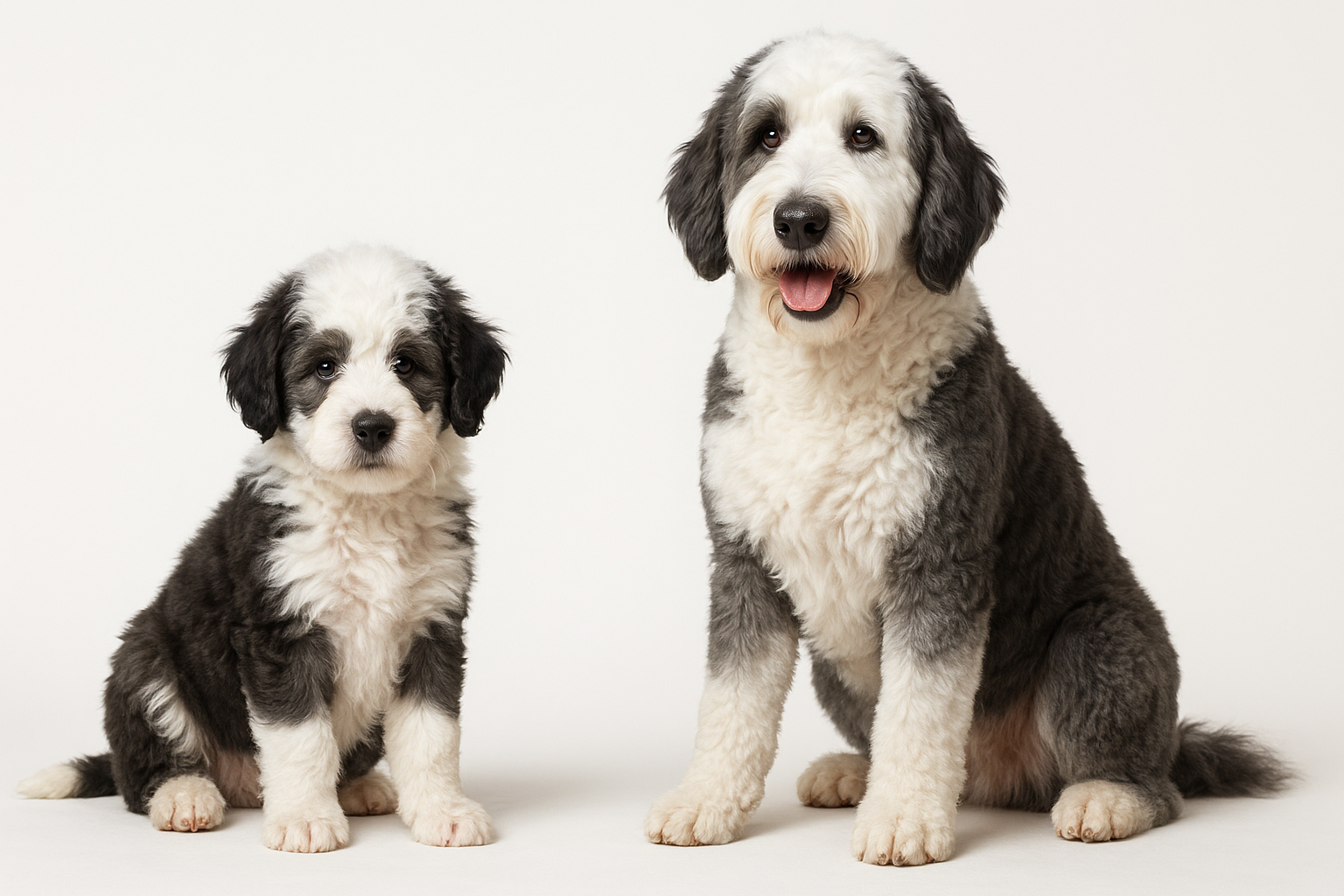
A Working Dog’s Brain Behind a Teddy Bear Face
The Sheepadoodle looks like something a child would design if handed a crayon and told to draw the perfect family dog — big, shaggy, impossibly soft. But beneath the plush exterior is a dog built from two of the most intelligent working lineages in the canine world: the Old English Sheepdog, bred to drive cattle across the English countryside, and the Standard Poodle, originally a German water retriever with an appetite for problem-solving.
That cognitive inheritance shapes everything about Sheepadoodle longevity. These dogs need mental engagement the way a Labrador needs to retrieve — without it, stress behaviors emerge, and chronic stress is not neutral For aging. A bored Sheepadoodle is not just destructive. Over years, the elevated cortisol burden contributes to inflammatory load, immune dysregulation, and accelerated cellular aging [4][8].
At 45 to 80 lbs, the Sheepadoodle falls into a size range where lifespan is neither guaranteed by small-breed longevity patterns nor shortened by giant-breed compression. The 12 to 15 year range reflects both the hybrid vigor benefit of a first-generation cross and the orthopedic and metabolic challenges that come with a large, active body. The dogs who reach the upper end of that range tend to have owners who understood early that this cross requires more than grooming — it requires a structured health plan.
Hybrid Vigor: What It Does and Does Not Protect Against
First-generation Sheepadoodles (F1 crosses) benefit from heterosis — the increased genetic diversity that comes from crossing two unrelated purebred lines. Research on canine hybrid vigor suggests that F1 crosses show reduced incidence of certain recessive conditions compared to their purebred parents, and may have lower rates of some autoimmune and cardiac diseases [2][4].
However, hybrid vigor is not a blanket shield. Conditions that are polygenic — involving multiple genes across both parent breeds — can still appear. Hip dysplasia, for example, is common in both Old English Sheepdogs and Standard Poodles. Crossing them does not eliminate the risk; it may moderate severity, but the structural vulnerability persists. Similarly, progressive retinal atrophy appears in Poodle lines and can be passed to offspring regardless of the cross.
The practical takeaway: screen as if both parent breed risk profiles apply simultaneously. Do not assume the cross has eliminated anything.
Breed-Specific Risk Profile
Hip Dysplasia
Both parent breeds carry significant hip dysplasia prevalence. The OFA database shows Old English Sheepdogs at roughly 19% dysplastic, and Standard Poodles at approximately 12% [3]. In a 45 to 80 lb cross, abnormal hip joint development creates cumulative load over a decade-plus lifespan. Early radiographic screening — ideally by 12 to 24 months — establishes a structural baseline. Watch for bunny-hopping gait, reluctance to climb stairs, and stiffness after rest.
Bloat (Gastric Dilatation-Volvulus)
Deep-chested anatomy inherited from both parent breeds places Sheepadoodles at elevated bloat risk. GDV is the second leading cause of death in large breeds, with mortality rates of 10 to 33% even with emergency surgery [6]. Feed two to three smaller meals daily rather than one large meal. Avoid vigorous exercise within 60 minutes of eating. Discuss prophylactic gastropexy with your veterinarian if your dog has a particularly deep, narrow chest.
Progressive Retinal Atrophy (PRA)
Progressive retinal atrophy is well-documented in Poodle lines, with DNA tests available for the prcd-PRA variant. In Sheepadoodles, PRA risk depends heavily on whether the Poodle parent was tested clear. Early signs include night blindness, dilated pupils in normal light, and bumping into objects in dim conditions. Genetic testing of the puppy or knowledge of parental test results can quantify this risk.
Arthritis
At their weight range and activity level, Sheepadoodles face cumulative joint stress that frequently manifests as arthritis by mid-life. The combination of Old English Sheepdog joint laxity tendencies and large-breed mechanical load means cartilage degradation can begin before obvious clinical signs appear. Maintaining lean body condition reduces joint stress by roughly 20% compared to overweight dogs [8].
Hypothyroidism
Both parent breeds show elevated hypothyroidism rates. Clinical signs — weight gain without dietary change, lethargy, bilateral symmetrical hair loss, cold intolerance — often develop gradually and are mistakenly attributed to aging. Annual thyroid panels starting at age 3 to 4 catch subclinical hypothyroidism before metabolic consequences compound.
Atopic Dermatitis
Poodles rank among the top breeds for atopic dermatitis, and this allergic predisposition carries into Sheepadoodle offspring. Chronic skin inflammation is not merely uncomfortable — it represents ongoing immune activation that diverts resources from repair and maintenance. Persistent paw licking, ear inflammation, ventral skin redness, and recurrent hot spots warrant allergy workup rather than repeated antibiotic courses.
The Longevity Priorities That Move the Needle
For most Sheepadoodle owners, these actions deliver the greatest return on health investment:
- Screen for conditions common in both Old English Sheepdog and Poodle lines — hip radiographs, thyroid panels, ophthalmologic exams
- Maintain lean body condition throughout life — the Purina Lifetime Study demonstrated 1.8 additional years in lean versus overweight dogs [8]
- Follow a breed-appropriate exercise and nutrition protocol that accounts for large-breed joint demands
Lean body condition, early screening, and mental engagement are the three pillars of Sheepadoodle longevity [2][7][8].
Evidence-Based Longevity Priorities
Body Composition and Joint Protection
A 65 lb Sheepadoodle carrying 5 extra pounds experiences roughly 20 additional pounds of force across the hip joints with every stride. Weight management in this cross is orthopedic care in disguise. Use body condition scoring (ribs easily palpable, visible waist tuck from above, abdominal tuck from the side) rather than relying solely on scale weight. Reassess portions quarterly and adjust for seasonal activity changes.
Condition-Focused Prevention Stack
Hip dysplasia, bloat, PRA, and hypothyroidism represent the highest-yield screening targets. Build your veterinary relationship around a prevention calendar that schedules these assessments at appropriate intervals rather than waiting for symptoms. Fast treatment escalation — acting on the first screening abnormality rather than the third — is where most longevity gains occur.
Cognitive Engagement and Stress Management
Sheepadoodles inherit working intelligence from both lineages. Dogs with higher cognitive engagement show fewer signs of age-related cognitive decline in the Dog Aging Project data [4]. Structured training sessions, novel problem-solving tasks, and social complexity (not just social exposure) protect against the neurological aging that accelerates in understimulated dogs.
Preventive Screening Cadence
Set routine veterinary checkpoints and escalate frequency when hip, thyroid, or skin parameters show early drift. Ophthalmologic exams every 12 to 18 months catch PRA progression before functional vision loss occurs.
Breed-Specific Research
Use these evidence deep dives to add mechanism-level context to your Sheepadoodle longevity plan:
- Joint Screening Protocol by Breed: hip and joint screening timelines and early intervention strategies for large-breed crosses.
- Canine Hypothyroidism and Longevity Management: thyroid screening protocols and management strategies for breeds with elevated hypothyroidism risk.
- Eye Health Screening Frequency by Breed: ophthalmologic screening guidelines for breeds carrying PRA risk.
Genetic Testing: When It Matters
Genetic testing in Sheepadoodles delivers the most value when it clarifies which parent breed risks are actually present in your individual dog — not as a one-time checkbox, but as the starting point for a targeted monitoring plan.
- PRA panel (prcd-PRA at minimum) determines whether progressive retinal atrophy is a realistic threat or a theoretical one. If positive, ophthalmologic screening cadence tightens.
- Hip and elbow screening via OFA or PennHIP by 12 to 24 months establishes structural baseline. Results guide exercise intensity and joint supplement decisions.
- Thyroid baseline at age 3 to 4 catches subclinical hypothyroidism before weight and coat changes become entrenched.
- Build your monitoring playbook around Hip Dysplasia and Hypothyroidism, so that every test result feeds into a specific follow-up action.
- Track everything in one place: test results, exam findings, medication changes, and what you notice at home. Patterns that span months or years only become visible when the data lives together.
Every genetic or diagnostic result should answer one question: what do I do differently starting now?
Breeding History and Health Implications
The Sheepadoodle combines a herding dog built for endurance and flock management with a retriever bred for aquatic work and trainability. Both parent breeds were selected for physical stamina, problem-solving, and responsiveness to handlers — traits that produce a dog with high exercise needs, strong social bonding, and low tolerance for routine monotony.
- Direct your monitoring attention first to Hip Dysplasia, Bloat, Progressive Retinal Atrophy — these are the risks that both parent breed health histories identify as most probable.
- Treat repeat low-grade drift as a signal to tighten cadence early, not as background noise.
- Static prevention plans decay in value. The most effective owners treat their Sheepadoodle’s health plan as something that evolves with every vet visit and every home observation.
Breeding history narrows the search. Serial monitoring data makes the call.
Age-Based Monitoring Milestones
- Puppy to 2 years: complete hip screening, establish baseline ophthalmologic exam, lock in feeding precision and bloat prevention habits.
- 3 to 7 years: annual screening with focused hip, thyroid, and dermatologic checks. Reassess exercise intensity against joint findings.
- 8+ years: move to semi-annual preventive visits, add cognitive assessment, and shift to trend-based management for arthritis and thyroid function.
Longevity Outlook: Built for a Long Run, If the Foundation Holds
Sheepadoodles have the raw material for a long, high-quality life. The hybrid vigor of a first-generation cross, the physical robustness of two working lineages, and a temperament that thrives on engagement all point toward the upper end of the 12 to 15 year range — but only if the structural and metabolic risks are managed from the start.
The Sheepadoodles who reach 14 and 15 are the ones whose owners invested in hip screening before the first limp, fed for lean body condition when the dog wanted more, maintained a bloat prevention protocol without exception, and kept the dog’s brain as active as its body. None of these interventions are dramatic. They are consistent, unglamorous habits that compound into years of additional quality life with a dog whose intelligence, loyalty, and warmth reward every bit of the investment.
Most-Missed Early Drift Pattern
Long-term decline in Sheepadoodles often starts as small changes that owners normalize too quickly:
- A subtle shift in gait symmetry linked to Hip Dysplasia — easy to dismiss as stiffness from a long walk
- Gradual weight gain and reduced energy mistaken for mellowing with age, actually masking Hypothyroidism progression
- Persistent paw licking or ear scratching attributed to seasonal allergies when it may signal chronic Atopic Dermatitis requiring systematic workup
If baseline function has drifted for 7 to 10 days, treat it as a prevention failure signal and reassess early.
Condition-Specific Monitoring Triggers
The difference between early detection and late diagnosis often comes down to recognizing these patterns:
- Hip Dysplasia: Watch for reluctance to rise, bunny-hopping on stairs, reduced play drive, or asymmetric muscle development in the hindquarters. Early radiographic changes may precede clinical lameness by years.
- Bloat: Non-productive retching, sudden abdominal distension, restlessness, and drooling constitute a surgical emergency. Know your nearest 24-hour emergency veterinary hospital before you ever need it.
- Progressive Retinal Atrophy: Night blindness is typically the first sign. If your dog hesitates at doorways in dim light or bumps into furniture that has not moved, schedule an ophthalmologic exam.
- Arthritis: Track mobility quality, not just willingness to move. A dog that still walks but takes longer to stand, avoids jumping, or shifts weight frequently is showing early joint compromise.
- Hypothyroidism: Bilateral hair thinning, unexplained weight gain, cold-seeking behavior, and declining energy without other explanation warrant thyroid panel.
- Atopic Dermatitis: Recurrent ear infections, paw staining from chronic licking, and ventral skin redness are not normal seasonal variation — they are immune-mediated patterns that require systematic management.
12-Month Longevity Execution Plan
Use this quarterly framework to keep prevention proactive instead of reactive:
Quarter 1: Baseline and Risk Mapping
- Record starting weight, hip screening results, and a two-week behavior and activity log as your reference point
- Review the breed-specific risk profile with your veterinarian and set screening dates for hip, thyroid, and ophthalmologic evaluation
- Eliminate feeding variability: one person measures meals, treats count toward daily calories, and establish bloat prevention feeding protocol
- Complete baseline ophthalmologic exam to establish PRA status
Quarter 2: Adherence and Early Drift Control
- Audit your first-quarter execution honestly: where did the plan hold, and where did consistency break down?
- If any tracked metric is drifting from baseline, increase how often you check it rather than waiting for the next scheduled review
- Treat changes in gait symmetry, exercise tolerance, skin condition, or weight trajectory as signals worth investigating now
- Reassess calorie intake against weight trend and adjust feeding plan if drift is detected
Quarter 3: Midyear Reassessment
- Reassess the first half of the year — which prevention strategies delivered measurable results, and which need recalibration?
- Match screening frequency to actual risk signals — some conditions may need closer watching than you expected, others less
- Modify exercise routines based on seasonal factors and joint assessment — reduce high-impact activities if hip findings warrant it
- Repeat thyroid panel if baseline was borderline or if energy and coat patterns have shifted
Quarter 4: Senior-Readiness Update
- Design your year-two plan based on everything you learned in year one — where to increase vigilance, where the current cadence is working
- Tighten the criteria that prompt a vet call: use the breed-specific patterns you observed to set more precise thresholds
- Document lessons learned and translate them into specific next-year commitments: what to measure, when to measure it, and what to do if something shifts
- Schedule repeat hip radiographs if initial screening showed borderline findings
- Confirm ophthalmologic status and update PRA monitoring frequency
When to Escalate Fast
The following changes require urgent veterinary assessment:
- Non-productive retching, sudden abdominal distension, or abdominal pain posturing — bloat is a surgical emergency with minutes-to-hours survival windows
- Sudden appetite loss lasting more than 24 hours, especially with lethargy or withdrawal
- Sudden onset of heavy or labored breathing, an unexplained collapse, or neurologic signs like circling, head tilt, or seizure activity
- Persistent GI distress: repeated vomiting, straining without production, or sudden behavioral change
- Dramatic overnight change in how your dog moves, rests, or interacts with the household
Home Tracking Dashboard
A monthly review of these markers gives you the earliest possible signal that something is shifting:
- Body weight trend and body-condition score
- Appetite regularity, water consumption, and elimination quality
- Gait symmetry and willingness to engage in normal activity
- Exercise tolerance and recovery patterns
- Skin and coat quality — texture changes, thinning, or chronic irritation
- How well your dog sleeps, whether daily behavior patterns remain stable, and any changes in social interest
- Condition-specific early drift markers tied to hip dysplasia, hypothyroidism, atopic dermatitis
Fuel for the Long Run
Sheepadoodle nutrition should prioritize joint support and lean body maintenance from the start. Use Feeding Guide for Large Breeds as the baseline framework, then layer targeted adjustments from Glucosamine and Chondroitin for Dogs and Omega-3 Fish Oil for Dogs when joint or skin targets are explicit.
Long-term outcomes usually improve when caloric intake is matched to actual activity level rather than breed weight charts, and when treats are budgeted daily rather than estimated.
Frequently Asked Questions
Are Sheepadoodles healthier than their purebred parents? First-generation (F1) Sheepadoodles often benefit from hybrid vigor, which can reduce the incidence of certain recessive conditions common in either parent breed. However, they are not immune to polygenic conditions like hip dysplasia that appear in both Old English Sheepdogs and Poodles. Screen as though both parent risk profiles apply.
How much exercise does a Sheepadoodle need for optimal health? Most adult Sheepadoodles thrive with 60 to 90 minutes of daily exercise combining walking, running, and mental stimulation. However, exercise intensity should be calibrated to hip screening results. Dogs with borderline hip findings benefit from sustained moderate activity (swimming, leash walks on soft surfaces) rather than high-impact play.
Should I get a prophylactic gastropexy for my Sheepadoodle? For deep-chested Sheepadoodles, prophylactic gastropexy — often performed during spay or neuter surgery — can dramatically reduce bloat-related mortality risk. Discuss the cost-benefit with your veterinarian, particularly if your dog has a narrow, deep chest conformation.
When should thyroid screening start? Baseline thyroid panels at age 3 to 4, repeated annually, catch subclinical hypothyroidism before metabolic consequences become entrenched. If your Sheepadoodle shows unexplained weight gain, energy decline, or bilateral coat thinning, test sooner.
Do Sheepadoodles need professional grooming, and does coat care affect health? Yes, the dense, often curly coat requires professional grooming every 6 to 8 weeks. Beyond aesthetics, matting traps moisture against the skin and creates conditions favorable for bacterial and fungal infections — particularly in a dog predisposed to atopic dermatitis. Regular grooming is a health intervention, not just a cosmetic one.
What is the most important thing I can do for my Sheepadoodle’s longevity? Keep them lean. The single most replicated finding in canine longevity research is that lean body condition extends lifespan. In the Purina Lifetime Study, lean-fed dogs lived a median of 1.8 years longer than their overweight littermates. For a Sheepadoodle, that could mean the difference between 12 and 14 years.
References
[1] Old English Sheepdog Health Information — OFA [2] Life expectancy, mortality, and longevity in companion dogs (Scientific Reports, 2024) [3] OFA CHIC Program [4] Dog Aging Project [5] AAHA Canine Life Stage Guidelines [6] Gastric Dilatation-Volvulus in Dogs — Merck Veterinary Manual [7] WSAVA Global Nutrition Guidelines [8] Effects of Diet Restriction on Life Span and Age-Related Changes in Dogs (Kealy et al., 2002)
This content is for informational purposes only and does not constitute veterinary advice. Always consult a licensed veterinarian for decisions about your dog’s health care.
Related reads
Related Reading
Continue exploring