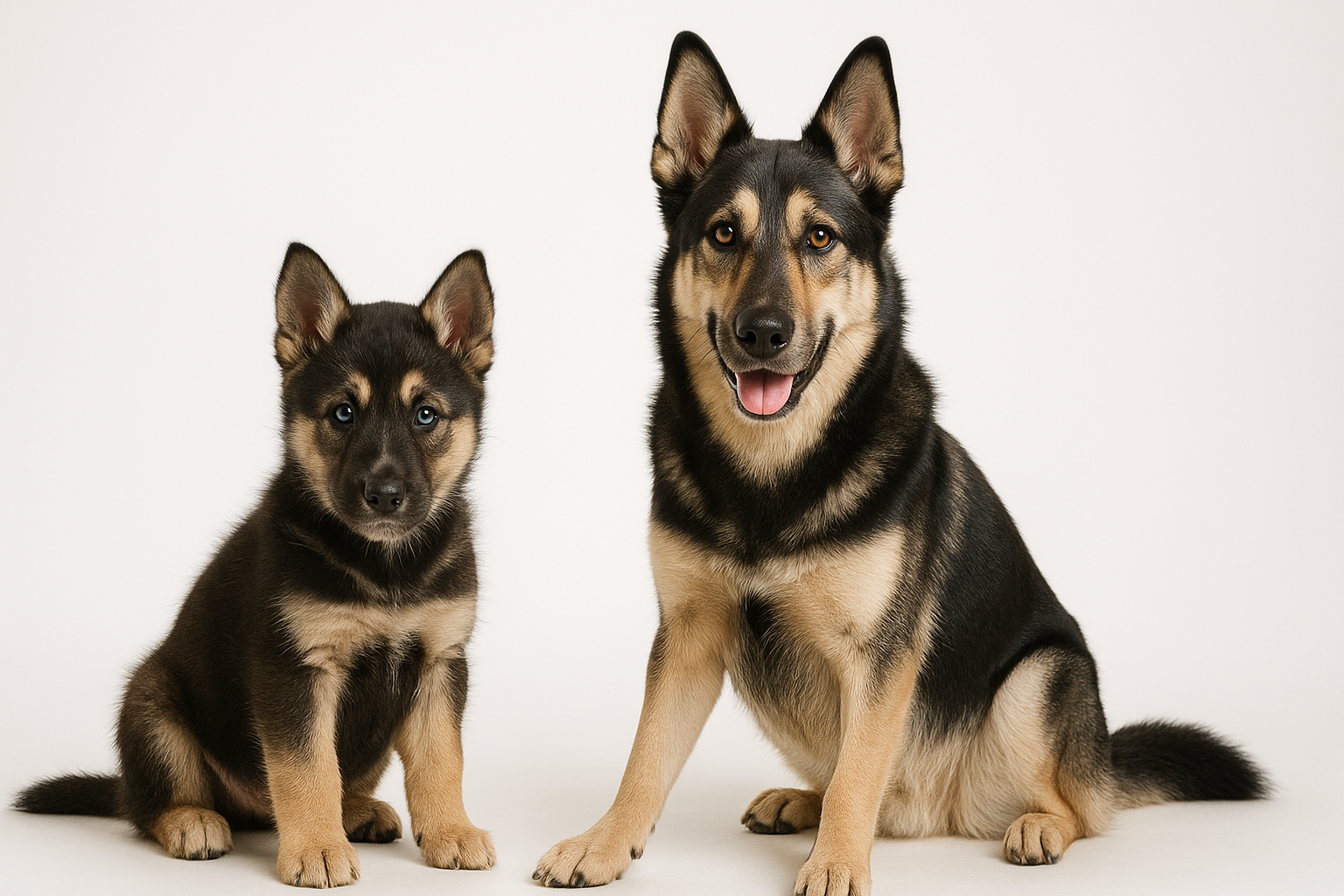
Built for Movement, Wired for Work
The Shepsky is what happens when two of the world’s most capable working breeds converge. The German Shepherd brings structural power, trainability, and an intense drive to partner with a handler. The Siberian Husky contributes endurance-athlete physiology, environmental resilience, and an independence that tempers the Shepherd’s need for constant direction. At 45 to 80 pounds, with a lifespan of 10 to 14 years, this is a dog built for sustained physical effort — and one whose longevity depends heavily on how well its musculoskeletal and neurological systems are maintained.
The challenge with Shepskies is not finding things for them to do. It is preventing the orthopedic and neurological conditions that can cut short a life designed for movement.
Hybrid Vigor: Real but Bounded
First-generation Shepsky crosses gain measurable heterosis benefit. German Shepherds carry one of the highest rates of hip dysplasia among large breeds — the Orthopedic Foundation for Animals (OFA) reports approximately 20% of evaluated German Shepherds show dysplastic hip joints. Siberian Huskies, by contrast, have one of the lowest hip dysplasia rates among large breeds (approximately 2%). Crossing these lines can meaningfully reduce — but not eliminate — hip dysplasia incidence.
Where hybrid vigor helps less: degenerative myelopathy, which both breeds carry at relevant frequencies. Bloat risk remains elevated in any deep-chested dog over 40 pounds. Eye conditions are common in Huskies, and the Shepsky inherits that predisposition regardless of crossing.
Risk Profile: Where Both Lines Converge
Hip Dysplasia: The Primary Orthopedic Concern
Hip dysplasia is the most clinically significant inherited risk in the Shepsky. The German Shepherd contributes the highest large-breed prevalence, while the Husky contributes lower but nonzero risk. The phenotypic outcome depends on which parent’s hip architecture predominates and whether environmental factors — rapid growth, excess weight during development, inappropriate exercise during skeletal maturation — amplify the genetic predisposition.
PennHIP or OFA radiographic evaluation before age 2 establishes a baseline. Early detection allows proactive management: controlled exercise, joint-supportive nutrition, weight optimization, and informed decisions about activity level that can preserve function for years beyond what unmanaged dysplasia would allow.
Elbow Dysplasia: The Overlooked Joint
Elbow dysplasia receives less attention than hip dysplasia but affects German Shepherds at significant rates. The condition encompasses fragmented medial coronoid process, ununited anconeal process, and osteochondrosis of the medial humeral condyle. Forelimb lameness, stiffness after rest, or reluctance to extend the front legs during play are early indicators.
Screen both elbows alongside hips. Early surgical intervention, when indicated, produces better long-term outcomes than conservative management of advanced disease.
Degenerative Myelopathy: The Neurological Threat
Degenerative myelopathy (DM) is a progressive spinal cord disease that causes hind-limb weakness and eventual paralysis. German Shepherds are among the breeds most commonly affected. The SOD1 gene mutation responsible for DM can be identified through genetic testing.
DM typically presents after age 7, beginning with hind-end weakness, knuckling of the rear paws, and progressive loss of coordination. There is currently no cure, but physical rehabilitation, hydrotherapy, and mobility support can preserve quality of life for months to years after onset. Knowing your Shepsky’s SOD1 status before symptoms appear allows earlier intervention planning.
Eye Conditions: The Husky Inheritance
Siberian Huskies carry elevated rates of eye conditions including hereditary cataracts, corneal dystrophy, and progressive retinal atrophy. The Shepsky inherits this predisposition, and annual ophthalmic screening — including fundoscopy and slit-lamp examination — is warranted throughout life.
Arthritis: The Downstream Consequence
Arthritis is not so much a primary disease in Shepskies as it is the predictable consequence of hip dysplasia, elbow dysplasia, and high-impact activity on large-breed joints. By age 8, a significant percentage of large-breed dogs show radiographic evidence of osteoarthritis regardless of clinical symptoms.
Maintaining lean body condition, supporting joint health through targeted nutrition and appropriate exercise, and starting multimodal pain management early — before mobility is significantly compromised — are the highest-yield strategies.
Bloat: The Acute Emergency
Bloat (gastric dilatation-volvulus, or GDV) is a life-threatening emergency that disproportionately affects deep-chested breeds over 40 pounds. The stomach dilates with gas and can rotate on its axis, cutting off blood supply. Without emergency surgical intervention, GDV is fatal.
Risk reduction strategies include feeding two or three smaller meals instead of one large meal, avoiding vigorous exercise within an hour of eating, and using slow-feeder bowls. Prophylactic gastropexy — surgically tacking the stomach to the abdominal wall — eliminates the volvulus component and can be performed during spay/neuter or as an elective procedure. Discuss this option with your veterinarian.
Five-Point Longevity Plan
- Orthopedic baseline by age 2 — PennHIP or OFA evaluation of hips and elbows.
- DM genetic testing — know your dog’s SOD1 status before symptoms appear.
- Lean body condition throughout life — monthly weight tracking, measured feeding.
- Bloat prevention protocol — split meals, avoid post-meal exercise, consider prophylactic gastropexy.
- Annual ophthalmic and orthopedic reassessment — with semiannual exams after age 8.
Evidence-Based Longevity Priorities
Weight as the Master Variable
Every kilogram of excess body weight accelerates joint deterioration in a dog predisposed to hip and elbow dysplasia. The Purina Lifetime Study demonstrated 1.8 years of additional median lifespan in lean versus overweight dogs — a finding with outsized relevance in breeds where orthopedic disease is the primary lifespan limiter. In a Shepsky, weight management is not a general wellness recommendation. It is the single most impactful intervention you control.
Exercise Programming for Joint Longevity
The Shepsky needs substantial daily exercise, but the type matters as much as the volume. Low-impact activities — swimming, controlled trotting, structured hiking on varied terrain — build and maintain muscle mass without the repetitive impact loading that accelerates joint degeneration. High-impact activities like repeated ball-chasing, jumping for frisbees, and running on hard surfaces should be limited, especially in dogs with any degree of dysplasia.
Neurological Monitoring as Routine
Hind-limb proprioception should be part of your monthly home assessment. Can your dog walk backward? Does the dog scuff its rear toenails? Is there asymmetry in hind-limb muscle mass? These observations, documented over time, create the trend data that distinguishes normal aging from early DM progression.
Breed-Specific Research
- Joint Screening Protocol by Breed: orthopedic evaluation timelines for breeds predisposed to hip and elbow dysplasia.
- Muscle and Mobility Longevity Protocol: evidence-based exercise programming for maintaining musculoskeletal health.
- Eye Health Screening Frequency by Breed: ophthalmic screening schedules for breeds with inherited eye conditions.
- Senior Dog Screening Protocol: What to Test and When: comprehensive screening guidelines for aging large-breed dogs.
- Canine Cardiac Monitoring Protocol: cardiovascular monitoring for large, active breeds.
Genetic Testing: Especially Important in This Cross
The Shepsky is one of the mixed breeds where genetic testing provides unusually high clinical value. Two specific tests matter most:
- SOD1 mutation test for degenerative myelopathy. DM is progressive and currently incurable. Knowing your dog is at-risk (homozygous for the mutation) allows you to plan for physical rehabilitation, mobility aids, and quality-of-life discussions before a crisis.
- Hip and elbow dysplasia predisposition markers. While radiographic evaluation remains the gold standard, genetic panels can supplement this with information about collagen and joint-development gene variants.
- Anchor monitoring to Hip Dysplasia and Degenerative Myelopathy. These are the conditions where early knowledge most dramatically changes management.
- Update genetic risk interpretation at each annual exam as clinical findings accumulate.
How Parent Breed Heritage Shapes Risk
The German Shepherd’s musculoskeletal vulnerabilities — hip dysplasia, elbow dysplasia, degenerative myelopathy — represent the primary risk axis. The Siberian Husky’s eye conditions and autoimmune tendencies contribute a secondary risk layer. The Husky’s generally superior hip architecture provides a counterbalance.
- Focus your surveillance on Hip Dysplasia, Elbow Dysplasia, Degenerative Myelopathy, and Eye Conditions.
- The Husky’s endurance physiology often moderates the German Shepherd’s tendency toward rear-end structural weakness, but this is variable and should be confirmed through individual evaluation rather than assumed.
- Adapt your plan based on your individual dog’s conformation, weight trajectory, and clinical findings.
Life-Stage Monitoring Timeline
- Puppy to 2 years: Controlled growth nutrition (avoid overfeeding during skeletal development), PennHIP or OFA radiographs, first ophthalmic exam, DM genetic test.
- 3 to 7 years: Annual wellness labs, orthopedic reassessment, ophthalmic screening, weight tracking, and exercise programming review.
- 8+ years: Semiannual exams with arthritis assessment, neurological evaluation (DM screening), cardiac and metabolic panel, and mobility support planning.
What to Track at Home Every Month
- Weight and body condition score
- Gait symmetry — watch for limping, stiffness after rest, or reluctance to rise
- Hind-limb proprioception — can the dog walk backward, place feet correctly, navigate uneven surfaces
- Rear toenail wear pattern (asymmetric scuffing can indicate early DM)
- Exercise tolerance and recovery time
- Eye clarity, discharge, and visual confidence
- Appetite, hydration, and stool consistency
- Abdominal distension, restlessness, or unproductive retching (bloat signs)
Condition-Specific Monitoring Triggers
- Hip Dysplasia: Track gait symmetry, difficulty rising, and reluctance to climb stairs. Escalate for sudden lameness, progressive mobility loss, or muscle wasting in the hindquarters.
- Elbow Dysplasia: Watch for forelimb stiffness, limping after rest, and reluctance to extend front legs fully. Escalate for persistent or worsening lameness.
- Degenerative Myelopathy: Monitor hind-end coordination, knuckling, and the ability to walk backward. Escalate for progressive hind-limb weakness or dragging paws.
- Eye Conditions: Track lens clarity, discharge, and visual confidence. Escalate for sudden vision changes or signs of eye pain.
- Arthritis: Watch for reduced activity, stiffness, reluctance to jump, and changes in sleeping position. Escalate for visible pain during movement or significant mobility decline.
- Bloat: Monitor for abdominal distension, unproductive retching, restlessness, and drooling. This is always a same-day emergency.
12-Month Longevity Execution Plan
Quarter 1: Baseline and Risk Mapping
- Establish baseline weight, body condition, hip/elbow radiographic status, and ophthalmic findings
- Obtain DM genetic test results and discuss implications with your vet
- Implement feeding protocol: measured meals split into two or three daily portions, treats within 10% of daily calories
- Discuss prophylactic gastropexy if not already performed
Quarter 2: Adherence and Early Drift Control
- Audit Q1 plan compliance and correct gaps
- Tighten observation on any metric that moved — weight, gait, exercise tolerance, or visual behavior
- Adjust calorie intake against weight trend
- Begin or refine exercise programming based on orthopedic status
Quarter 3: Midyear Reassessment
- Evaluate six months of data and recalibrate the prevention approach
- Update screening cadence based on emerging clinical trends
- Adjust exercise for seasonal conditions and any joint tolerance changes
- Reassess proprioceptive function if DM-at-risk
Quarter 4: Senior-Readiness Update
- Build next year’s monitoring plan from twelve months of trend data
- Update urgent vet-visit triggers based on observed patterns
- If approaching age 7-8, plan for semiannual screening transition
- Reassess orthopedic status and arthritis management plan
- Confirm eye health and update ophthalmic screening frequency
When to Seek Same-Day Veterinary Care
- Abdominal distension with restlessness, unproductive retching, or drooling — suspect bloat, do not wait
- Sudden severe lameness or inability to bear weight
- Labored breathing or collapse
- Acute hind-limb weakness or loss of coordination (especially if DM risk is known)
- Complete food refusal combined with lethargy
- Loss of consciousness, seizure activity, or resting respiratory rate sustained above 40 breaths per minute
Longevity Outlook: Keeping a Working Dog Working
A Shepsky at 12 who still trots along a hiking trail, still navigates uneven ground with confidence, still rises from rest without hesitation — that dog is the product of a hip evaluation at age 2 that shaped every exercise decision since, a weight management protocol that never wavered, a DM test that allowed early neurological monitoring, and a bloat prevention plan that was followed every single day.
Both parent breeds were designed for sustained physical performance. The Shepsky inherits that capacity — and the orthopedic and neurological vulnerabilities that come with it. Longevity in this cross is not about limiting activity. It is about programming activity intelligently, maintaining structural integrity, and monitoring the nervous system with the same rigor you apply to the musculoskeletal system.
Diet and Feeding Strategy
Use Feeding Guide for Large Breeds as your baseline framework. Split daily intake across two or three meals to reduce bloat risk. During growth, follow large-breed puppy nutrition guidelines from Puppy Large Breed Nutrition to prevent rapid skeletal growth that exacerbates dysplasia.
Glucosamine and Chondroitin for Dogs and Joint Supplement Stack Guide provide evidence-based context for joint-supportive supplementation when veterinarian-guided.
Frequently Asked Questions
Do Shepskies have fewer hip problems than purebred German Shepherds? First-generation crosses between German Shepherds and Huskies often show reduced hip dysplasia rates due to the Husky’s superior hip architecture. However, the degree of improvement is variable and individual — radiographic screening remains essential regardless of parentage.
How big will my Shepsky get? Most Shepskies weigh between 45 and 80 pounds at maturity, depending on which parent they favor. Males tend toward the higher end. Growth rate during puppyhood should be controlled to protect developing joints.
Should I get prophylactic gastropexy for my Shepsky? This is a worthwhile conversation with your veterinarian. Prophylactic gastropexy eliminates the volvulus component of GDV (bloat) and can be performed during routine spay/neuter surgery. For deep-chested dogs over 40 pounds, the risk-benefit ratio generally favors the procedure.
What is degenerative myelopathy and should I test for it? DM is a progressive spinal cord disease that causes hind-limb weakness and eventual paralysis. Both German Shepherds and Huskies carry the SOD1 mutation. Genetic testing identifies at-risk dogs before symptoms appear, allowing for early physical rehabilitation planning and quality-of-life discussions.
How much exercise does a Shepsky need? Most Shepskies require 60 to 90 minutes of daily physical activity plus mental stimulation. Prioritize low-impact exercise — swimming, controlled trotting, hiking — over high-impact activities like repeated ball-chasing, especially if orthopedic evaluation shows any degree of dysplasia.
When should I worry about my Shepsky’s hind legs? Progressive hind-limb weakness, knuckling (dragging the top of the paw), difficulty rising from rest, and asymmetric toenail wear are all signals that warrant veterinary evaluation. In a DM-at-risk dog, these signs should be investigated promptly rather than attributed to normal aging.
References
[1] AKC German Shepherd Dog Breed Information [2] AKC Siberian Husky Breed Information [3] OFA Hip Dysplasia Statistics [4] Life expectancy, mortality, and longevity in companion dogs (Scientific Reports, 2024) [5] Effects of Diet Restriction on Life Span and Age-Related Changes in Dogs (Kealy et al., 2002) [6] AAHA Canine Life Stage Guidelines [7] Merck Veterinary Manual [8] OFA CHIC Program
This content is for informational purposes only and does not constitute veterinary advice. Always consult a licensed veterinarian for diagnosis, treatment, and care decisions specific to your dog.
Related reads
Related Reading
Continue exploring