A Gentle Giant Built From Two Remarkable Breeds
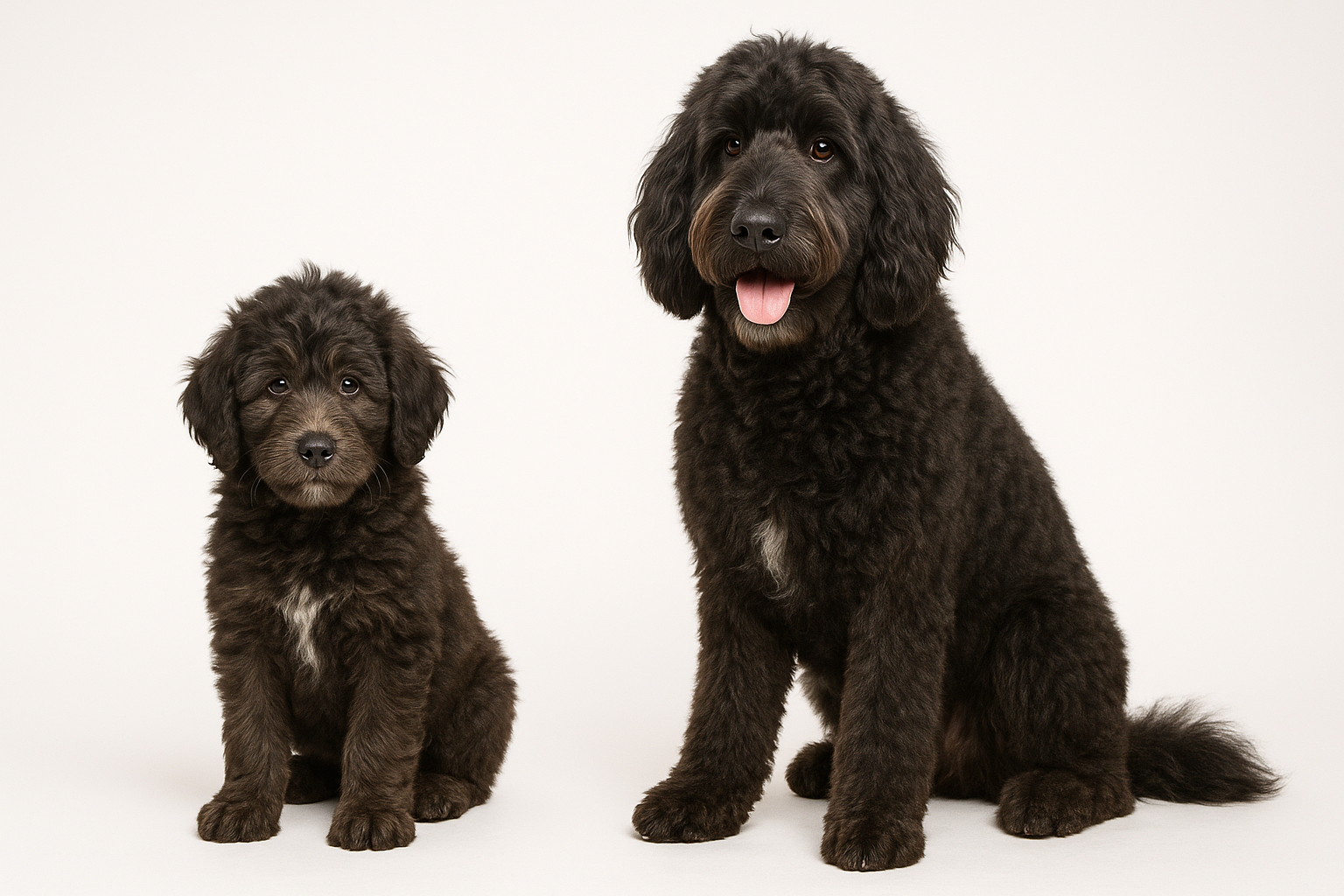
The Newfypoo is among the largest designer crosses, bringing together the Newfoundland — a breed whose water rescue capabilities are legendary and whose temperament has earned it the nickname “nanny dog” — with the Standard Poodle, a breed whose intelligence and athletic versatility are unmatched. At 70 to 130 pounds, this is not a dog that blends into the background. It fills a room with presence, warmth, and a calm solidity that belies its size.
But that size carries a biological cost. Giant-breed dogs live shorter lives than smaller dogs. This is one of the most consistent findings in canine longevity research. A 2024 study in Scientific Reports confirmed that body size remains the strongest predictor of lifespan across breeds. The Newfypoo’s 8-to-12-year expected lifespan reflects this reality. Every year in a giant breed is harder earned and more medically intensive than in a 15-pound dog.
That timeline is not a ceiling — it is a challenge. The right orthopedic management, cardiac surveillance, weight discipline, and cancer awareness can push a Newfypoo well into its twelfth year and beyond.
Hybrid Vigor: Meaningful but Not Sufficient
The Newfoundland and Standard Poodle gene pools are sufficiently distinct for F1 crosses to benefit from genuine heterosis. This is particularly relevant for the Newfoundland, a breed with a relatively narrow genetic base and elevated rates of several serious conditions — including subvalvular aortic stenosis (SAS), a congenital heart defect, and osteosarcoma.
Where hybrid vigor helps most: reducing the frequency of autosomal recessive conditions unique to the Newfoundland line, including some cardiac defects. Where it helps less: hip dysplasia (both breeds carry significant risk), bloat (a function of deep-chested anatomy rather than genetics alone), arthritis (driven by body mass and joint mechanics), and cruciate ligament disease (correlated with body weight).
Hybrid vigor improves the starting position. It does not change the fundamental physics of being a 100-pound dog.
Risk Profile: The Giant-Breed Reality
Hip Dysplasia: Both Parents Contribute
Hip dysplasia is the primary orthopedic concern in the Newfypoo. OFA data shows Newfoundlands at approximately 26% dysplastic hip prevalence — among the highest of any breed — and Standard Poodles at approximately 12-13%. Even with hybrid vigor moderating expression, the probability of hip laxity in this cross remains clinically meaningful.
PennHIP evaluation as early as 16 weeks provides predictive data about adult hip status. OFA radiographs at 24 months confirm the picture. Controlled growth rate during puppyhood — particularly avoiding rapid weight gain between 3 and 8 months — is one of the most impactful early interventions. Lean body condition throughout adulthood protects whatever hip architecture your Newfypoo has.
Bloat: The Immediate Threat
Bloat (gastric dilatation-volvulus) is the most acutely dangerous condition in giant-breed dogs. The Newfypoo’s deep, broad chest creates the anatomical predisposition. When the stomach fills with gas and rotates, death follows within hours without emergency surgery.
Prevention is paramount: split daily food into three meals, use slow-feeder bowls, avoid exercise within 90 minutes of eating, and monitor for the classic signs — abdominal distension, unproductive retching, restlessness, and drooling. Prophylactic gastropexy — performed during spay/neuter or as an elective procedure — eliminates the volvulus risk. For a dog this size, gastropexy is arguably the single most important surgical decision you will make outside of an emergency.
Heart Disease: The Newfoundland Shadow
Heart disease in Newfoundlands includes subvalvular aortic stenosis (SAS), a congenital narrowing below the aortic valve that ranges from mild (often asymptomatic) to severe (exercise intolerance, syncope, sudden death). SAS prevalence in Newfoundlands is estimated at 20-30% depending on the study and screening methodology.
Echocardiographic screening should occur before age 2 to detect congenital defects, with follow-up auscultation at every wellness visit. Doppler echocardiography measures flow velocity across the aortic valve — the gold standard for SAS diagnosis and grading. Dogs with moderate to severe SAS require activity modification, cardiac medication, and regular monitoring.
The Poodle’s generally healthier cardiac profile may moderate SAS risk in the Newfypoo, but any deep-chested giant breed also faces acquired cardiac disease as it ages. Dilated cardiomyopathy (DCM) screening becomes relevant in senior years.
Arthritis: The Weight Equation
Arthritis in a Newfypoo is almost inevitable if the dog reaches advanced age. At 70 to 130 pounds, the cumulative mechanical load on every joint surface — hips, elbows, knees, spine — drives cartilage wear over time. The question is not whether arthritis will develop, but when, and how aggressively you can slow it.
Lean body condition is the most impactful modifiable factor. Every excess pound accelerates cartilage breakdown. Low-impact exercise — particularly swimming, which Newfypoos often love — maintains muscle mass and cardiovascular fitness without the repetitive joint loading that accelerates degeneration.
Cruciate Ligament Disease: A Weight-Correlated Risk
Cruciate ligament disease — the canine equivalent of an ACL tear — is strongly correlated with body weight. Dogs over 50 pounds are at significantly elevated risk, and Newfypoos routinely exceed that threshold by 50 to 80 pounds. The tibial plateau leveling osteotomy (TPLO) is the current surgical gold standard, with success rates exceeding 90% in appropriate candidates.
Prevention focuses on avoiding sudden high-impact torque on the stifle: no twisting jumps, controlled play on slippery surfaces, and maintaining muscle mass that stabilizes the joint dynamically.
Osteosarcoma: The Giant-Breed Cancer
Osteosarcoma (bone cancer) is the most common primary bone tumor in dogs, and incidence increases dramatically with body size. Newfoundlands carry elevated osteosarcoma risk, and while hybrid vigor may offer some protection, any giant-breed dog should be monitored for the hallmark signs: progressive, localized limb pain, lameness that does not resolve with rest, and visible or palpable swelling near a long bone.
Early detection matters. While osteosarcoma carries a guarded prognosis overall, outcomes improve with earlier intervention — particularly when amputation and chemotherapy can be initiated before metastasis is advanced.
Five-Point Longevity Plan
- Hip evaluation by age 2 — PennHIP or OFA radiographs to establish orthopedic baseline.
- Cardiac screening before age 2 — echocardiography to rule out congenital SAS, with annual auscultation thereafter.
- Prophylactic gastropexy — discuss with your vet, ideally performed during spay/neuter.
- Strict lean body condition — monthly weigh-ins, measured feeding, treats within 10% of daily calories.
- Cancer awareness from midlife — prompt investigation of persistent lameness, new lumps, or localized bone pain.
Evidence-Based Longevity Priorities
Growth Rate Control in Puppyhood
The period between 3 and 8 months is the most formative window for skeletal development in giant breeds. Rapid weight gain during this phase increases hip and elbow dysplasia expression. Giant-breed puppy formulas with controlled calcium and phosphorus ratios, combined with measured feeding that avoids ad libitum access, lay the foundation for joint health that lasts a lifetime.
The Weight-Lifespan Equation in Giant Dogs
At this body size, every kilogram matters more. The Purina Lifetime Study showed lean dogs lived 1.8 years longer — in a breed with an 8-to-12-year lifespan, that represents a 15-20% extension of total life. Weight management in a Newfypoo is not a suggestion. It is the most impactful single decision you make outside of emergency care.
Cardiac Monitoring as Non-Negotiable
Given the Newfoundland’s SAS prevalence, cardiac screening in the Newfypoo should be treated as essential rather than optional. A normal echocardiogram at age 1-2 does not eliminate all cardiac risk (acquired disease can develop later), but it rules out the congenital defects that represent the most immediate threat. Annual auscultation catches new murmurs as they emerge.
Swimming as Therapeutic Exercise
Both Newfoundlands and Standard Poodles have water-working heritage. The Newfypoo often inherits a genuine affinity for water, making swimming one of the most practical and effective exercise modalities for this cross. Swimming provides cardiovascular conditioning, builds and maintains muscle mass, supports joint range of motion, and places zero impact load on vulnerable joint surfaces. If you have access to water, use it.
Breed-Specific Research
- Joint Screening Protocol by Breed: orthopedic evaluation timelines for breeds predisposed to hip dysplasia.
- Canine Cardiac Monitoring Protocol: echocardiographic and auscultation protocols for breeds with congenital heart risk.
- Muscle and Mobility Longevity Protocol: exercise programming for maintaining musculoskeletal health in large and giant breeds.
- Breed-Specific Cancer Research Summary: cancer incidence, screening, and early detection guidance.
- Senior Dog Screening Protocol: What to Test and When: comprehensive screening guidelines for aging giant-breed dogs.
- Caloric Intake Control and Dog Longevity: evidence on caloric restriction and lifespan extension.
Genetic Testing: High-Value in This Cross
Genetic testing in the Newfypoo is particularly valuable for clarifying cardiac and cancer risk inheritance.
- SAS-associated genetic markers, while less definitive than echocardiography, can supplement cardiac screening with risk stratification data.
- Osteosarcoma predisposition markers are emerging but not yet clinically definitive. Maintain awareness-based screening regardless of genetic results.
- Anchor initial monitoring to Hip Dysplasia and Heart Disease. These are the conditions where early knowledge most directly changes management and outcomes.
- DM (degenerative myelopathy) testing is also worth considering, as both breeds carry the SOD1 mutation at low frequencies.
- Layer genetic data over clinical observations across years. In a giant breed with a shorter lifespan, the window for early intervention is correspondingly compressed.
How Parent Breed Heritage Shapes Risk
The Newfoundland contributes its massive frame, water-working capability, gentle temperament, and significant cardiac, orthopedic, and cancer risk. The Standard Poodle adds intelligence, coat diversity, and a generally healthier cardiovascular profile that may moderate — but cannot eliminate — the Newfoundland’s cardiac vulnerabilities.
- Prioritize surveillance on Hip Dysplasia, Heart Disease, Bloat, Cruciate Ligament Disease, and Osteosarcoma.
- The Newfoundland’s calm temperament often makes the Newfypoo easier to examine and screen than many large breeds — use this cooperative nature to maintain rigorous screening schedules.
- At this body size, the margin between “managing well” and “falling behind” on prevention is narrower than in smaller dogs.
Life-Stage Monitoring Timeline
- Puppy to 2 years: Giant-breed growth nutrition, PennHIP or OFA hip evaluation, echocardiographic screening for SAS, gastropexy discussion, DM genetic testing.
- 3 to 7 years: Annual wellness labs, orthopedic reassessment, cardiac auscultation, weight management review, cancer awareness, and exercise programming.
- 8+ years: Semiannual exams with arthritis assessment, cardiac evaluation (echocardiography if indicated), orthopedic and neurological review, cancer screening, and metabolic panel.
What to Track at Home Every Month
- Weight and body condition score (use a floor scale or veterinary scale)
- Gait symmetry and willingness to exercise at usual intensity
- Difficulty rising from rest, especially on hard surfaces
- Hind-limb strength and coordination
- Resting respiratory rate during sleep
- Appetite, hydration, and stool consistency
- Any new lumps, bumps, or areas of persistent lameness or bone pain
- Abdominal distension, restlessness, or unproductive retching (bloat indicators)
- Exercise tolerance and post-exercise recovery time
Condition-Specific Monitoring Triggers
- Hip Dysplasia: Track gait symmetry, difficulty rising, bunny-hopping gait, and hindquarter muscle wasting. Escalate for progressive lameness.
- Bloat: Monitor for abdominal distension, unproductive retching, pacing, and excessive drooling. This is always a same-day emergency — minutes matter.
- Heart Disease: Track resting respiratory rate, exercise tolerance, coughing, and fainting episodes. Escalate for respiratory rate consistently above 30 breaths per minute during sleep or any syncope event.
- Arthritis: Watch for reduced activity, stiffness, reluctance to climb stairs or jump, and changes in resting posture. Escalate for visible pain during movement.
- Cruciate Ligament Disease: Monitor for sudden hind-limb lameness, especially after activity. Escalate for non-weight-bearing lameness or clicking in the stifle joint.
- Osteosarcoma: Watch for persistent, localized limb pain, progressive lameness, and swelling near long bones. Escalate for any lameness that does not improve with 48-72 hours of rest.
12-Month Longevity Execution Plan
Quarter 1: Baseline and Risk Mapping
- Establish baseline weight, body condition, hip radiographic status, and cardiac echocardiographic findings
- Implement feeding protocol: three measured meals daily, treats within 10% of daily calories, slow-feeder bowls
- Confirm gastropexy status and schedule if not yet performed
- Begin home respiratory rate tracking
Quarter 2: Adherence and Early Drift Control
- Audit Q1 compliance and correct gaps
- Tighten observation on any metric that moved — weight, gait, exercise tolerance, or respiratory rate
- Adjust calorie intake against weight trend (this is not optional in a giant breed)
- Refine exercise programming — increase swimming, reduce high-impact activities
Quarter 3: Midyear Reassessment
- Evaluate six months of data and recalibrate the prevention approach
- Update screening cadence based on emerging clinical trends
- Review heat management (giant breeds with dense coats are heat-sensitive)
- Reassess joint supplements and pain management if arthritis is emerging
Quarter 4: Senior-Readiness Update
- Build next year’s monitoring plan from twelve months of trend data
- Update urgent vet-visit triggers based on observed patterns
- If approaching age 7, plan semiannual screening transition with cardiac echocardiography
- Comprehensive orthopedic assessment and arthritis management review
- Cancer screening awareness check — review any new lumps, persistent lameness, or weight changes
When to Seek Same-Day Veterinary Care
- Abdominal distension with restlessness, unproductive retching, or drooling — this is bloat until proven otherwise. Go immediately.
- Collapse, fainting, or loss of consciousness — suspect cardiac event
- Sudden severe lameness, especially with localized swelling near a long bone
- Labored breathing or resting respiratory rate sustained above 40 breaths per minute
- Complete food refusal combined with lethargy for more than 12 hours
- Sudden hind-limb weakness or inability to bear weight
Longevity Outlook: Making Every Year Count
A Newfypoo at 11 who still lumbers to the lake with quiet enthusiasm, still rises from the floor without visible effort, still breathes evenly through the night — that dog had a gastropexy that prevented a bloat crisis, an echocardiogram that caught SAS early enough to manage, a growth plan that protected developing joints, and a decade of weight management that kept 100 pounds of dog from becoming 120.
Giant breeds demand more from their owners than any other size category. The timeline is shorter, the conditions are more serious, and the intervention windows close faster. But the Newfypoo — with the Newfoundland’s patience and the Poodle’s intelligence — makes a partner that is worth every investment. The breed combination produces a dog of remarkable temperament and genuine versatility, and the owners who match that with disciplined preventive care are rewarded with years they would not otherwise get.
Diet and Feeding Strategy
Use Feeding Guide for Giant Breeds as your baseline framework. Split daily intake across three meals to reduce bloat risk. During puppyhood, giant-breed growth nutrition is critical — controlled calcium, phosphorus, and calorie levels prevent the rapid growth that exacerbates hip dysplasia. See Puppy Large Breed Nutrition for detailed guidance.
Glucosamine and Chondroitin for Dogs and Joint Supplement Stack Guide provide evidence-based context for joint-supportive supplementation. Omega-3 Fish Oil for Dogs may support cardiac and joint health when veterinarian-guided.
Frequently Asked Questions
Why do Newfypoos have shorter lifespans than smaller dogs? Body size is the strongest predictor of canine lifespan. Giant-breed dogs age faster at the cellular level, carry higher cancer rates, and place greater mechanical stress on their joints and cardiovascular systems. A 2024 Scientific Reports study confirmed this relationship across over 500,000 dogs. The Newfypoo’s 8-to-12-year range reflects this biological reality.
Is gastropexy really necessary for a Newfypoo? Gastropexy is one of the most impactful preventive procedures available for any giant, deep-chested breed. It eliminates the volvulus component of GDV (bloat), which is otherwise often fatal. The procedure can be performed during routine spay/neuter at minimal additional cost and risk.
How do I know if my Newfypoo has a heart condition? Echocardiographic screening before age 2 is the gold standard for detecting congenital heart defects like SAS. Annual auscultation catches new murmurs. At home, monitor resting respiratory rate during sleep (normal is below 30 breaths per minute), exercise tolerance, and any coughing or fainting episodes.
Can a Newfypoo live past 12 years? Yes, though it requires rigorous preventive care. Lean body condition, early cardiac screening, joint management, and cancer awareness are the primary factors that push giant-breed dogs past their statistical median lifespan. Some well-managed Newfypoos live to 13 or 14.
How much should my Newfypoo weigh? Healthy weight varies by frame size, but most Newfypoos should fall between 70 and 130 pounds with visible waist and palpable ribs. Your veterinarian can help determine the ideal weight for your individual dog’s frame. If you can not feel ribs easily, your dog is likely carrying excess weight.
What is the best exercise for a Newfypoo? Swimming is the gold standard — it builds muscle, supports cardiovascular fitness, and places zero impact on joints. Both parent breeds have water-working heritage, and many Newfypoos take to swimming naturally. Moderate leash walks and controlled hiking are good complementary activities. Avoid repetitive high-impact exercise, especially in dogs with any degree of hip dysplasia.
References
[1] AKC Newfoundland Breed Information [2] AKC Standard Poodle Breed Information [3] OFA Hip Dysplasia Statistics [4] Life expectancy, mortality, and longevity in companion dogs (Scientific Reports, 2024) [5] Effects of Diet Restriction on Life Span and Age-Related Changes in Dogs (Kealy et al., 2002) [6] AAHA Canine Life Stage Guidelines [7] OFA CHIC Program [8] Merck Veterinary Manual
This content is for informational purposes only and does not constitute veterinary advice. Always consult a licensed veterinarian for diagnosis, treatment, and care decisions specific to your dog.
Related reads
Related Reading
Continue exploring